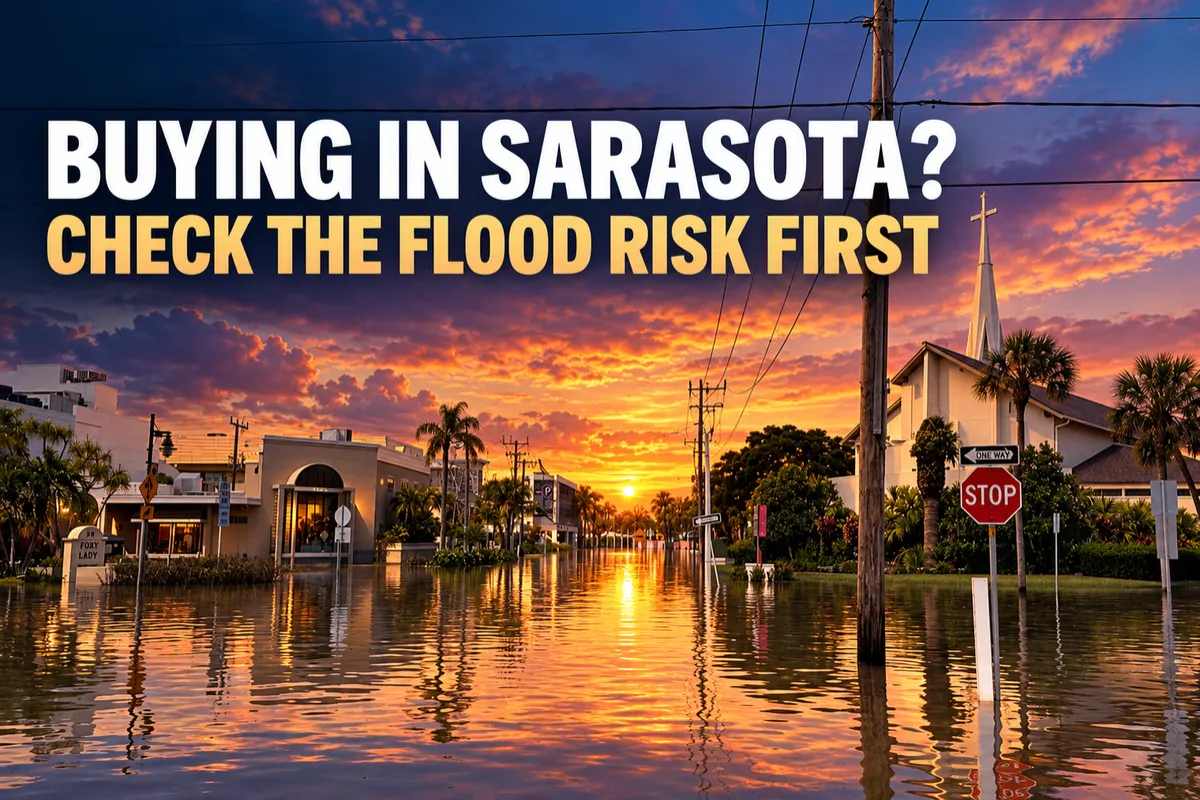
Sarasota Flood Zones & Insurance: 2026 Buyer’s Guide
Updated October 2026 | Sarasota County, Florida
Quick answer: Before buying a home in Sarasota, check the property’s FEMA flood zone and elevation certificate, read the seller’s Florida flood disclosure, ask whether the home flooded during Hurricanes Helene or Milton in 2024, and obtain homeowners, wind, and flood insurance quotes during your inspection period. Flood risk is not limited to the barrier islands; heavy rain can also flood inland neighborhoods.
Why flood risk is the first question Sarasota buyers should ask
The 2024 hurricane season showed why Sarasota home buyers need to investigate both coastal surge and inland rainfall. Hurricane Helene passed offshore on September 26, 2024, yet pushed major surge into Sarasota County. Hurricane Milton made landfall near Siesta Key on October 9, 2024 and brought severe coastal flooding as well as heavy rain.
Milton also flooded low areas and creek-adjacent neighborhoods farther inland. Distance from the Gulf alone does not determine a property’s flood risk. A home’s flood history, elevation, drainage, insurance availability, and post-storm repairs can affect ownership cost, financing, resale value, and future rebuilding requirements.
Sarasota flood zones explained in plain English
FEMA Flood Insurance Rate Maps identify Special Flood Hazard Areas and insurance risk zones. Always confirm the exact address because risk can change from one parcel to the next.
Zone VE: coastal high-hazard area
VE zones face the 1% annual-chance flood and additional wave action. They are commonly found along Gulf-front stretches of Siesta Key, Lido Key, Longboat Key, and Casey Key. Flood insurance is generally required for a federally backed mortgage, and premiums may be higher because of coastal exposure.
Zone AE: high-risk floodplain with a base flood elevation
AE zones also face the 1% annual-chance flood. FEMA maps identify a base flood elevation, or BFE. In Sarasota, AE zones may include bayfront, canal, creekside, and other low-lying areas. Flood insurance is generally required for a federally backed mortgage.
Zone X: moderate or lower mapped risk
Zone X covers many mainland and inland communities. A lender may not require flood insurance, but Zone X does not mean “no risk.” Rainfall, drainage problems, and changing conditions can still produce flooding. Sarasota County recommends flood insurance even outside the Special Flood Hazard Area because every property has some flood risk.
How to check the flood risk for any Sarasota address
Search the official FEMA map. Use the FEMA Flood Map Service Center and confirm the property’s current zone and map panel.
Review Sarasota County resources. The county’s flood map information explains local zones, map changes, and elevation requirements.
Request the elevation certificate. Ask the seller, listing agent, surveyor, or county whether an elevation certificate is available.
Compare the lowest floor with the BFE. Elevation can influence insurance pricing and the feasibility of future improvements.
Investigate the property’s history. Review disclosures, permits, repairs, claims information available to the owner, and visible signs of water intrusion.
Get quotes during the inspection period. Send the address, roof information, inspections, elevation certificate, and desired coverage to more than one insurance professional.
What is Sarasota’s 50% rule?
Substantial-improvement and substantial-damage rules can require an older structure in a high-risk flood area to meet current flood standards when the cost of repairs or improvements reaches a threshold tied to the building’s market value. This can mean elevating or rebuilding parts of a structure. The calculation and applicable rules are property-specific, so verify them with the local floodplain or building official before planning a major renovation or buying a damaged home.
Florida’s flood disclosure law: what a seller must tell a buyer
Under Florida Statute 689.302, a seller must provide a written flood disclosure at or before the sales contract is executed. The current form addresses:
Known flooding that damaged the property during the seller’s ownership
Flood-related insurance claims, including National Flood Insurance Program claims
Flood assistance received from any source, including FEMA
The disclosure also reminds buyers that standard homeowners insurance does not cover flood damage. The law has limits: a seller may not know what happened under an earlier owner. Ask direct questions, review permits and repair records, and have the inspector look for past water intrusion.
The three insurance quotes Sarasota buyers should request
1. Homeowners or condominium coverage
A homeowners policy commonly addresses fire, theft, liability, and covered interior or structural damage. Condominium owners often need an HO-6 policy for the unit and personal property. Older homes may require a four-point inspection before a carrier will offer coverage.
2. Windstorm and hurricane coverage
Wind coverage may include a separate hurricane deductible. A wind-mitigation inspection documents features such as roof-to-wall connections, roof shape, secondary water resistance, shutters, and impact-rated openings that may qualify for credits.
3. Flood insurance
Flood insurance covers rising water from storm surge, overflowing waterways, or accumulated surface water, subject to the policy’s terms and limits. It is separate from standard homeowners insurance. NFIP policies often have a 30-day waiting period, although exceptions can apply when coverage is purchased in connection with certain loan closings. Confirm the effective date with the agent before closing.
What changes a Sarasota insurance quote?
Roof age, material, condition, and permit history. A documented newer roof can materially affect eligibility and cost.
Wind-mitigation features. Impact openings, shutters, roof attachments, and secondary water barriers may earn credits.
Flood zone and elevation. The relationship between the structure and the BFE matters.
Prior claims and repairs. Recent wind or water losses may affect underwriting.
Replacement cost and deductibles. Coverage amount, hurricane deductible, and selected endorsements change the premium.
Occupancy and property type. Primary, seasonal, rental, condominium, and vacant properties can be treated differently.
Citizens Property Insurance Corporation reported an average statewide 8.8% decrease for homeowners multiperil rates in 2026, effective July 1 for new and renewing policies. That is a statewide average, not a quote for a specific Sarasota property. Flood insurance remains separate, and actual premiums can vary widely.
2026 Sarasota home buyer flood and insurance checklist
Look up the FEMA flood zone and base flood elevation.
Request the elevation certificate or ask where one can be obtained.
Read the seller’s flood disclosure before signing the contract.
Ask whether the property took water during Helene or Milton and what was repaired.
Review permit history for drywall, electrical, HVAC, roofing, and other post-storm work.
Get homeowners, wind, and flood quotes during the inspection period.
Order four-point and wind-mitigation inspections when appropriate.
Confirm roof age, material, condition, and permit date.
For condominiums, review milestone inspections, structural reserve studies, association insurance, rental rules, and special assessments.
Check the property’s hurricane evacuation level separately from its FEMA flood zone.
Sarasota flood insurance FAQ
Do I need flood insurance to buy a home in Sarasota?
If the property is in a Special Flood Hazard Area and the loan is federally backed, flood insurance is generally required. Outside a high-risk zone it may be optional, but flooding can occur anywhere. Ask both the lender and an insurance professional about the specific address.
Does Zone X mean the home cannot flood?
No. Zone X reflects lower mapped risk than A or V zones; it does not guarantee that a property will stay dry. Intense rainfall, drainage limitations, and changing conditions can still cause flooding.
How can I learn whether a home flooded during Helene or Milton?
Start with the seller’s written disclosure and direct questions. Review permits and invoices for post-storm repairs, ask about claims and assistance, and have the inspector examine materials and systems for water intrusion.
What is an elevation certificate?
An elevation certificate documents a building’s elevation characteristics. Insurers, lenders, and floodplain officials may use it to evaluate risk, policy rating, or compliance. Ask whether the existing certificate is current enough for your planned use.
Are a flood zone and a hurricane evacuation zone the same?
No. A flood zone is used for floodplain management and insurance risk. An evacuation level helps emergency managers plan evacuation for storm surge and other hazards. Check both.
Which Sarasota areas have the greatest coastal flood exposure?
Barrier islands and Gulf-front, bayfront, canal, and creek-adjacent properties can have greater mapped exposure, but risk is parcel-specific. Siesta Key, Lido Key, Longboat Key, Casey Key, and low-lying mainland areas should all be checked address by address.
Questions to ask before you make an offer
What is the current flood zone? Is there an elevation certificate? Did water enter the home, garage, or crawlspace? Were insurance or FEMA claims filed? Which repairs were completed and permitted? What do current homeowners, wind, and flood quotes cost? Does the association carry adequate master coverage? Are improvements limited by floodplain rules?
A careful review does not mean avoiding Sarasota. It means understanding the property’s true monthly cost and physical risk before your contract deadlines expire.
Need help evaluating a Sarasota property?
I can help you compare neighborhoods, identify the documents to request, and coordinate the property-specific questions you should bring to your inspector, lender, insurance agent, surveyor, attorney, and local building officials.
Book a Sarasota buyer consultation with Myra K. Peric
Sources and further reading
Information is believed reliable but is not guaranteed. This article is general educational information, not legal, tax, engineering, lending, or insurance advice. Rules, maps, premiums, and underwriting requirements can change. Verify the exact property with the appropriate licensed professionals and government agencies.
Share this Sarasota buyer guide
#SarasotaRealEstate #SarasotaHomes #SarasotaFloodZones #FloodInsurance #FloridaRealEstate #FloridaHomeBuyer #SiestaKey #LidoKey #LakewoodRanch #VeniceFlorida #NorthPortFL #BradentonRealEstate #HurricanePreparedness #HomeBuyingTips #GulfCoastLiving


